
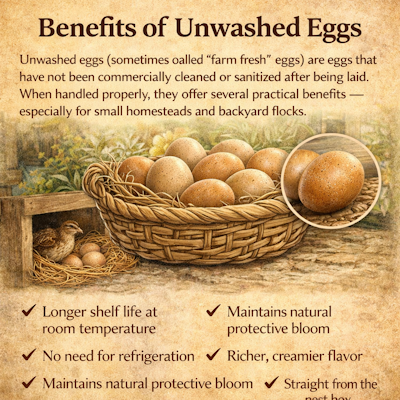
Benefits of Unwashed Eggs Unwashed eggs (sometimes called “farm fresh” eggs) are eggs that have not been commercially cleaned or sanitized after being laid. When handled properly, they offer several practical benefits — especially for small homesteads and backyard flocks.
🥚 1. Natural Protective Coating (The “Bloom”)
Freshly laid eggs have a thin, invisible protective layer called the bloom (or cuticle).
This coating:
- Seals the shell’s pores
- Helps block bacteria from entering
- Reduces moisture loss
- Extends freshness
Washing removes this natural barrier, which is why commercially washed eggs must be refrigerated immediately.
🥚 2. Longer Room-Temperature Storage (When Unwashed)
Because the bloom remains intact, unwashed eggs can safely be stored at room temperature for a period of time (common in many countries), as long as they are:
- Clean (no visible dirt or manure)
- Collected promptly
- Stored in a cool, dry place
- Once washed, eggs must be refrigerated.
🥚 3. Extended Freshness
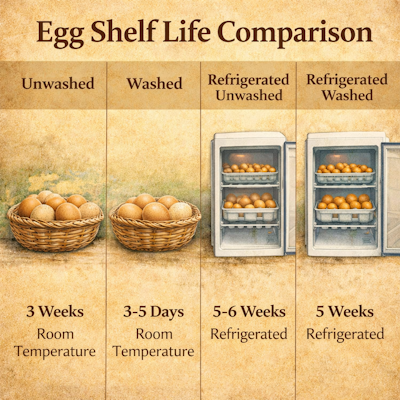
Unwashed eggs often stay fresh longer because the shell’s natural defenses remain intact. When refrigerated, they can last several weeks.
🥚 4. Less Moisture Loss
The bloom helps reduce evaporation through the shell, meaning the egg maintains its internal quality longer.
🥚 5. Fewer Processing Steps
For small homesteads, keeping eggs unwashed:
- Reduces handling
- Reduces water use
- Avoids temperature shock
- Keeps the egg in its most natural state
Important Safety Notes
Unwashed does not mean dirty. Eggs should still be:
- Collected daily
- Kept clean and dry
- Gently dry-brushed if needed (instead of washed)
If an egg is heavily soiled, cracked, or questionable, it should not be sold or consumed.
If you choose to wash an egg:
- Wash it right before use
- Use warm water (not cold)
- Refrigerate immediately after washing
Why Many Homesteads Prefer Unwashed Eggs
Small-scale producers often prefer unwashed eggs because the natural bloom preserves quality without industrial processing. This approach aligns with traditional egg handling practices used for generations.