
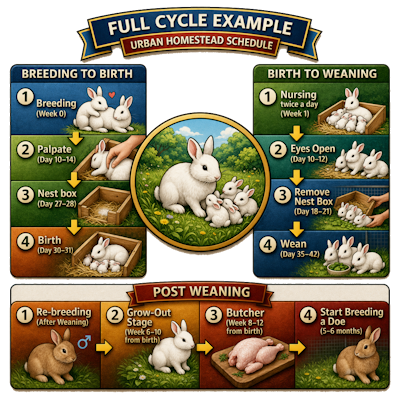
Full Cycle Example (Urban Homestead Schedule)
Breeding to Birth
- Breeding (Week 0)
- Palpate (Day 10 -14)
- Nest box (Day 27 -28)
- Birth (Day 30 -31).
Birth to Weaning
- Nursing twice a day (Week 1)
- Eyes Open (Day 10 -12)
- Remove Nest box (Day 18 -21)
- Wean (Day 35 -42)
Post Weaning
- Re-breading (After Weaning)
- Grow-Out Stage (Week 6-10 from birth)
- Butcher (Week 8-12 from birth)
- Start Breading a new doe (5 -6 months)
Breeding to Birth
1. Breeding
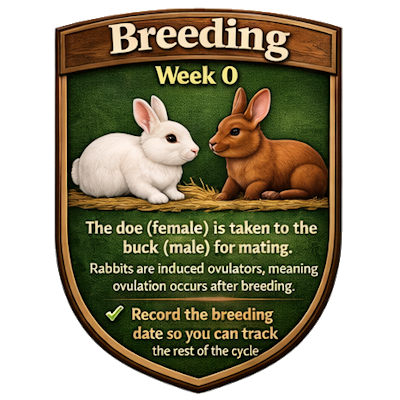
Week 0
- The doe (female) is taken to the buck (male) for mating.
- Rabbits are induced ovulators, meaning ovulation occurs after breeding.
- Breeding usually takes a few minutes.
✔ Record the breeding date so you can track the rest of the cycle.
2. Palpation (Pregnancy Check)
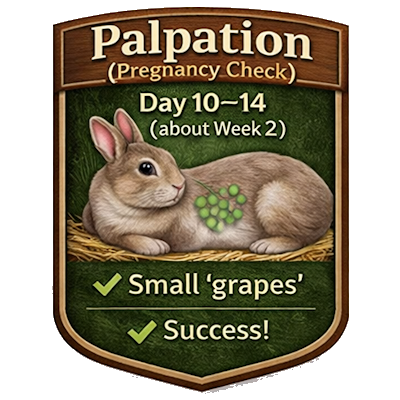
Day 10–14 (about Week 2)
- You can palpate the doe’s abdomen to feel developing kits.
- They feel like small grapes or marbles.
If you do not feel kits:
- Rebreed the doe.
3. Nest Box Placement
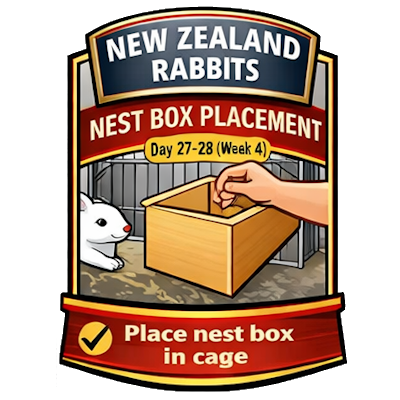
Day 27–28 (Week 4)
Place the nesting box in the cage.
Typical nesting materials:
- Straw
- Hay
- Pine shavings
The doe will:
- Pull fur from her belly
Line the nest
4. Birth (Kindling)
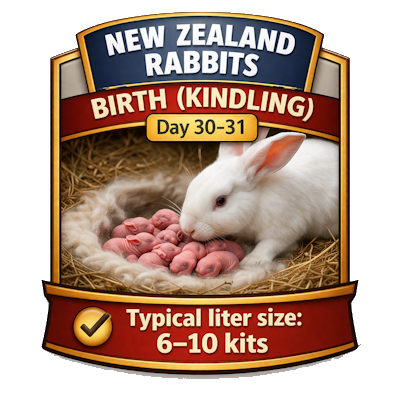
Day 30–31
This is called kindling.
Typical litter size:
- 6–10 kits
Newborn kits are:
- Blind
- Hairless
- Weigh about 40–60 grams
Most births happen early morning or overnight.
Birth to Weaning
5. First Week

Week 1
- Kits nurse once or twice per day
- They stay in the nest box for warmth
Check daily for: Dead kits and adequate nesting material
6. Eyes Open

Day 10–12
Important milestone:
- Kits open their eyes
Begin exploring the nest box
7. Nest Box Removal

Week 3 (Day 18–21)
Remove the nest box when:
- Kits leave the nest regularly
- Fur is fully developed
This prevents dirty nest boxes and injuries
8. Weaning
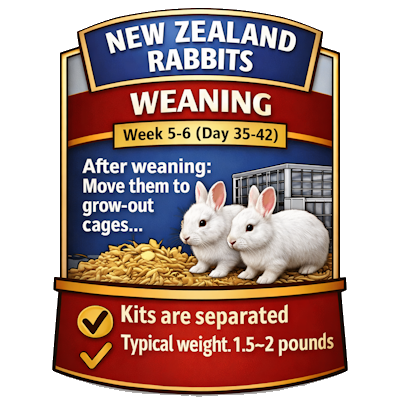
Week 5–6 (Day 35–42)
Kits are separated from the doe.
Typical weight: 1.5–2 pounds
After weaning:
Move them to grow-out cages or pens
Post Weaning
9. Rebreeding the Doe
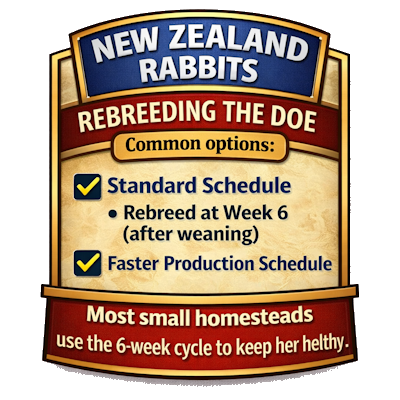
Common options:
Standard Schedule
Rebreed at Week 6 (after weaning)
Faster Production Schedule
Some breeders rebreed 10–14 days after kindling.
Most small homesteads use the 6-week cycle to keep does healthy.
10. Grow-Out Stage
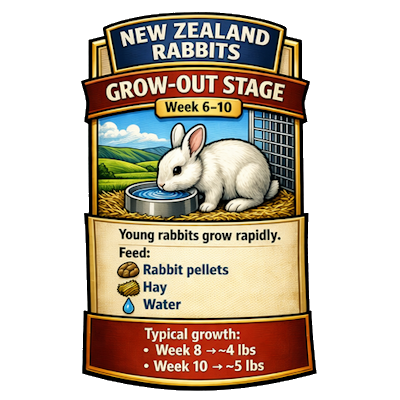
Week 6–10
Young rabbits grow rapidly.
Feed: Rabbit Pellets, Hay, and Water
Typical growth: Week 8 → ~4 lbs or Week 10 → ~5 lbs
11. Butcher Age
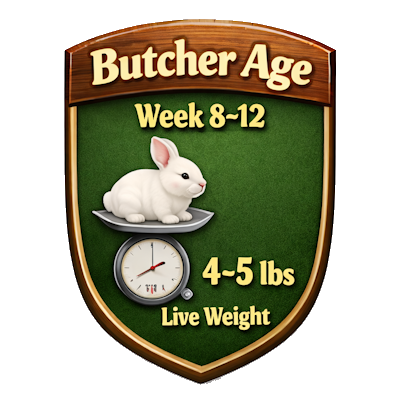
Week 8–12
Ideal butcher weight:
- 4–5 lbs live weight
- 2–3 lb dressed carcass
Most meat rabbit producers butcher at: 8–10 weeks
Production Example
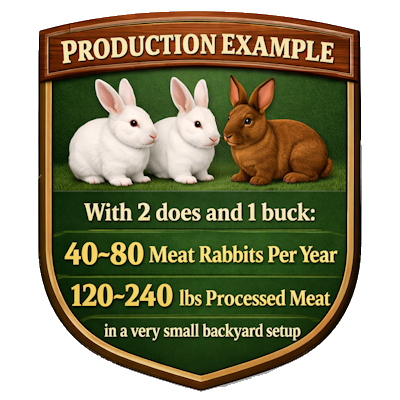
With 2 does and 1 buck:
You can produce roughly:
- 40–80 meat rabbits per year
- 120 to 240 pounds of processed meat a year
in a very small backyard setup.